Obviously no new sightings of the croc so I have not been updating this blog though I have been down to look around since but no sign of the elusive bast. I still think it existed but like the many other sightings in Cannock or Devon the creature responsible is now dead and missing. Unless it was misidentified.
I did meet someone with more curious info on Pluck Lake that their father who was a fisherman had fished in Pluck Lake and seen some unusually large eels there. Pluck lake gets wilder by the minute. I don't think this can explain the sighting though. The man who saw it was just too close.
Showing posts with label Pluck Lake. Show all posts
Showing posts with label Pluck Lake. Show all posts
Friday, August 8, 2008

Monday, May 12, 2008
This story's monster has a serpent caul: Dylan Thomas on the Crocodile
Almost a week of further investigation in good weather and at Fendrod Lake as well has revealed NO further sign of the Croc at least not in life. However he has turned up in the work of Swansea's most famous bard Dylan Thomas. One example is in a short poem to an insect To-Day, This Insect which makes for interesting reading in this extract:
As noted before Pluck Lake is noted as a refuge for dragonflies which this poem is perhaps addressing. With such allusive verse who can say.
In the poem I, In My Intricate Image the last three stanzas state:
What adds to the mysterious coincidences here is that the main other non-native element in Pluck Lake is terrapins. Earlier in the poem he uses the line:
The poem describes a combination of mechanical and natural imagery very appropriate to the area which is reclaimed from Swansea's industrial history. Also interesting to note that the poem describes a mighty hill like Kilvey Hill:
The insect certain is the plague of fables.
This story's monster has a serpent caul,
Blind in the coil scrams round the blazing outline,
Measures his own length on the garden wall
And breaks his shell in the last shocked beginning;
A crocodile before the chrysalis,
Before the fall from love the flying heartbone,
Winged like a sabbath ass this children's piece
Uncredited blows Jericho on Eden.
As noted before Pluck Lake is noted as a refuge for dragonflies which this poem is perhaps addressing. With such allusive verse who can say.
In the poem I, In My Intricate Image the last three stanzas state:
And in the pincers of the boiling circle,
The sea and instrument, nicked in the locks of time,
My great blood's iron single
In the pouring town,
I, in a wind on fire, from green Adam's cradle,
No man more magical, clawed out the crocodile.
Man was the scales, the death birds on enamel,
Tail, Nile, and snout, a saddler of the rushes,
Time in the hourless houses
Shaking the sea-hatched skull,
And, as for oils and ointments on the flying grail,
All-hollowed man wept for his white apparel.
Man was Cadaver's masker, the harnessing mantle,
Windily master of man was the rotten fathom,
My ghost in his metal neptune
Forged in man's mineral.
This was the god of beginning in the intricate seawhirl,
And my images roared and rose on heaven's hill.
What adds to the mysterious coincidences here is that the main other non-native element in Pluck Lake is terrapins. Earlier in the poem he uses the line:
They suffer the undead water where the turtle nibbles,
Come unto sea-stuck towers, at the fibre scaling,
The flight of the carnal skull
The poem describes a combination of mechanical and natural imagery very appropriate to the area which is reclaimed from Swansea's industrial history. Also interesting to note that the poem describes a mighty hill like Kilvey Hill:
They climb the country pinnacle,
Twelve winds encounter by the white host at pasture,
Corner the mounted meadows in the hill corral;
They see the squirrel stumble,
Saturday, May 3, 2008
Hunting the Croc at Night
Here are the photos from last nights expedition. The plan was discussed here Old Red Eyes - Croc Hunting at Night. As dusk fell and darkness grew across the land we prepared to see if the croc, which is a mostly nocturnal animal would emerge. At the start looking round the lake in the gloaming I noted there were loads of footprints from monster hunters so I think the area round the lake has been very well covered since the publicity had started. I also talked to a friendly guy who had brought his two kids to look for the croc.
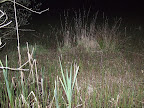
I wandered around in reed beds in the dark and checked likely places nearby for croc using a torch to check for eye shine. The street lamps illuminated the lake well so if he was there it would be easy to spot him.

Not seen in Swansea yet!
There was no sign of the croc but it increasingly felt like Blair Witch or Man/Swamp Thing country as we blundered around in the dark through muddy areas and reeds. Not exactly the Florida keys but at least it wasn't raining and there was also a lack of midges buzzing us. In ancient welsh lore such areas are good ones to see ellylldan or canwll corfe "corpse candles" [Elf-fire, willow the wisps or Jack O'Lanterns are some of the English names] widely associated with the supernatural and ill omens but now generally seen as swamp gas. They also were seen in graveyards and other places too so it is a little more complex than that.

Discoveries included a pipe which I guess may be part of the old workings as there were quarries, mines and industry in this area. It was about 100m from the water and was an ideal hiding place but we decided crawling down there after a croc was a bad idea!
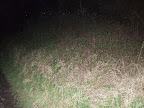
Then we found the rustling bramble bush which clearly had an animal in. Fancy plunging a hand in to see what it is? I think not. Didn't seem to be a croc shaped way in so we left it alone.
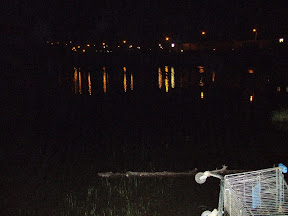
Also some idiots had chucked another trolley in the water and tore down the life belts. Very clever.
We also almost got run down by a 4 by 4 which zoomed past us. I think someone may have been shining headights onto water looking for the croc. Good tactic often used by crocodile hunters. But the croc I suspect is not in the water. If it is still alive it may have gone into hibernation till the weather improves. The problem is with a pine forest 5m or so from the waters edge on the north side, the reedbeds and vegetation to the east and Kilvey hill on the south with tons of bushes and trees there are tons of places for an animal to hide.
I don't think we are finding anything soon to be honest. But who knows.
Pluck Lake is 1km away directly from a far larger body of water Fendrod Lake which lies to the North-east and has more fish and bird life . Although the direct root takes you through a built up area a more roundabout way goes through the nature reserve then only 300 odd m from the lake. But it looks like you would have to go through a railway line. Or there maybe underground tunnels between Fendrod and Pluck Lake so I have been told! More about these in a future posts.
Perhaps a more likely destination is that you can after crossing the road travel through woodland to reach the Tawe. This is only 650m from the lake. So the croc maybe long gone!
That is if it fancies moving long distances which I doubt.
Thursday, May 1, 2008
Identification of the Swansea Crocodile? - Part 2
Taken yesterday while talking with Steve.
See this earlier post:
Important - Croc identified? Part I

A wet Day in Swansea at Pluck lake looking east

Looking towards the west end where croc was seen.

The dog whose walk caused Croc panic.

Steve throws a stone to show where croc was first sighted.

Steve points out where Croc moved towards white van roof.
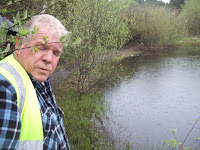
Steve Jenkins

A photo taken from bank showing the white van roof which croc swam over. This was not taken from where Steve was standing which was about 4m away but was taken closer directly beside it and it shows how the van lid would outline something swimming over it on a calm day as on Sunday.
See this earlier post:
Important - Croc identified? Part I

A wet Day in Swansea at Pluck lake looking east

Looking towards the west end where croc was seen.

The dog whose walk caused Croc panic.

Steve throws a stone to show where croc was first sighted.

Steve points out where Croc moved towards white van roof.

Steve Jenkins

A photo taken from bank showing the white van roof which croc swam over. This was not taken from where Steve was standing which was about 4m away but was taken closer directly beside it and it shows how the van lid would outline something swimming over it on a calm day as on Sunday.
Comments on Story
Weeding out the nonsense there are some useful comments on this story from the Swansea Evening Post's original story.
just a few mounths ago there was a report of a otter in there so it was probelt the same one there
callum semmens 14, Neath
i am a little 15 year old boy i go fishing down the pluck i have never seen the crock and i am always down there so if it is there leave it alone please ffffffiiiisssshhh
liam robins, swansea
I think it could well have been a mink or an otter, both are around 1m long and have a swimming profile that could be mistaken for a crocodile from a distance
John, Swansea
It could be the pluck ness monster, in past summers you would be lucky to reel in a small tench from the pluck, normally it's just sprats like roach , rud and perch however I have seen some big things come out of the Pluck over ther years, namely cars and trollies however this monster would be a welcome catch on the worm...
Scooter, Winch Wen Swansea
I have worked with reptiles in two zoos (Twycross and Tropiquaria) and have a soecial intrest in crocodillians. I have also nvestigated several cases of 'caimans' being seen in the midlands and i Cornwall. Nothing was ever found. A crocodillian could live in the UK during a warm summer but wopuld swiftly die come winter. It is possable people are mistaking a large sturgeon. Having said that several species of crocodillian have been caught in the uk over the years including Nile crocodile and specticaled caiman
Richard Freeman, Devon
I worked at a large Reptile House for several years, and both calls and rescues involving crocodilians were fairly common. Unfortunately, when people get hold of these animals (usually illegally) as pets, they often get released into the wild when they become too much to look after, to avoid alerting the authorities. The best way to check would be to visit the lake at night, and with a torch held at eye level, scan the lake margins - if you see any pink or white eyeshine (like catseyes) then it is likely to be true!
Dr James Reed, Yeovil
Approximately 2 years whilst walking my dog along the cycle path by the new bridge, opposite Ford's Plasmarl, I Saw a man staring in disbelief in the water, and as I looked myself I saw a tail disappearing into the water. This looked very much like a crocodile tail, which I commented, did you see that, and the man said people would not believe us if we told them, and walked off. So this has not been the first time, as also my wife and myself on another occasion with the dog saw what looked like a log in the water, but it slowly went down, out of sight, and we felt quite spooked. We believe quite strongly there is a crocodile there, and this should be taken far more seriously by the authorities than it is at present. We also do not want our e mail address printed as we would leave ourselves wide open to prank calls jamming up our e mails, but print the letter by all means.
Concerned dog walker, Swansea
Watch your ankles - a crocodile could be lurking in a Swansea lake
Swansea Evening Post April 28th 2008
Wednesday, April 30, 2008
Important - Croc identified? Part I

Steve Jenkins ... croc spotter
At around 7 pm I talked to Steve Jenkins at the Lake. What he told me further convinced me we are dealing with a member of the Crocodile family. I now know exactly where he stood and from where he saw the animal at that distance of roughly 3-4 m he could not have been mistaken especially as he is a fisherman and he noted the animals legs. The water was calm and the day was clear and fairly sunny.
From his description and what he thinks after showing him Croc photos it seems likely what he saw was a Spectacled Caiman . He described what seemed to be the characteristic bony ridge between its eyes. As that is a popular species for pets that makes sense. The main other possibility is perhaps an American alligator. I think he saw something like this:

From Hungry Hyaena website - "One of the adult spectacled caiman (Caiman crocodilus) disturbed by my wading in pousada bahia (Pousada Ararauna, Pantanal, Brasil)"

You can see where he was roughly from the map above. The blue man was his first location and the green man is Steve's finally location as is the fish is the croc. The war level today is much higher than on the satellite photo.
I also talked to Jon Downes, the Director, at the CFZ. He feels that the chances of a Croc surviving for any length of time are bleak in April. CFZ has been on a number of UK croc hunts in the last few years. He also filled me in on further on the illegal trade in crocs and other exotics. Alligators are easy to buy in Florida and were easy to smuggle back in hand luggage. It is tougher since 9/11 but perhaps in South America where Caimans come from security is not so tight. There is certainly an underground trade in place inside the UK. Furthermore he told me about 3 crocodile bodies that have been found in British waterways and ponds in recent times.
The Sun, and Swansea Evening Post are doing more on this story today.
More updates to come keep watching this blog. Please come forward if you seen anything.
Tuesday, April 29, 2008
The expedition
A party of two intrepid monster hunters set out. Here are the photos from the expedition:
We were at Pluck lake for around one half hours from around 5.15 till close to seven on Monday evening. Had a good look round wandering round the lake, there was plenty of light and i was fairly warm for April. The lake is approx 155m east to west, 80 m north to south.

[Pluck Pond from satellite this shows the pond with much lower water level than it has at the moment. The water reaches up to the undergrowth on the eastern shore now. It seems close to the size to other water areas such as Roman lake, Staffordshire which have reported crocs.]
No unknown or large animals were sighted but there was some bird life with a goose and some moorhens/coots. There were two of us and we had binoculars so we could keep a reasonably good eye on the lake throughout our visit. Most of the lake/pond is open water but the eastern end has watery reed beds which merge into bushes and trees. In the north-east corner rivulets and gullies connect to the main water. Heavy undergrowth and mud make it an ideal place for an amphibious animal to hide.

I could not get into that area without making quite a bit of noise which might have alerted it. If there was a caiman it could take cover in that area easily I guess. I had discovered that the Spectacled caiman [which grows up to seven feet] is a very adaptable species found in all lowland wetland and riverine habitat within its range in South and North America. It can be found most often in the still water areas of these habitats. This caiman has the widest distribution of any species in the Alligatorinae family. If environmental conditions become too hot, the Spectacled Caiman will burrow into mud and estivate (estivate is to summer what hibernate is to winter). Thus it could have gone into hiding in this area possibly using them same techniques. The Dwarf Caiman was even more prone to hiding and burrowing and is a very nocturnal and it was another popular pet.
 " The dwarf caiman’s hefty, bonier scales shield its internal organs from swift waters, rocky river bottoms and such predators as anacondas and jaguars. It has an unusually short, smooth, pointy skull with an upturned snout, a useful adaptation for burrowing into a riverbank or bottom during the day."
On the other hand the goose was also lurking in the reed beds but I suppose it might not have detected the Caiman. If there is a caiman I believe it has dug itself down for warmth and may die soon unless there is a sudden heat wave (in Wales this is unlikely). It simply won't have enough energy to hunt till thee is. It will depend on how much food it has had recently how long it could survive.
One thing which can be ruled out is that I saw no floating logs or anything else likely to confuse someone watching. Two other monster hunters arrived while we were there but they also found nothing and left after a while. Local lads they had been down the pond many times when kids and said it was smaller than it used to be. I had guessed as much that from a stoney area which looked like former lake bed on the south side. They also said the pond was supposed to cover old mine workings so the centre was very deep indeed. That was interesting info.
What adds to the questions on the lake is that someone on the Swansea Evening Post website had stated:
Anyway what I have nicknamed the Morfadile remains a mystery. More info from the public is needed hence this blog so if you are in Swansea and you have seen something let us know.
We were at Pluck lake for around one half hours from around 5.15 till close to seven on Monday evening. Had a good look round wandering round the lake, there was plenty of light and i was fairly warm for April. The lake is approx 155m east to west, 80 m north to south.

[Pluck Pond from satellite this shows the pond with much lower water level than it has at the moment. The water reaches up to the undergrowth on the eastern shore now. It seems close to the size to other water areas such as Roman lake, Staffordshire which have reported crocs.]
No unknown or large animals were sighted but there was some bird life with a goose and some moorhens/coots. There were two of us and we had binoculars so we could keep a reasonably good eye on the lake throughout our visit. Most of the lake/pond is open water but the eastern end has watery reed beds which merge into bushes and trees. In the north-east corner rivulets and gullies connect to the main water. Heavy undergrowth and mud make it an ideal place for an amphibious animal to hide.

I could not get into that area without making quite a bit of noise which might have alerted it. If there was a caiman it could take cover in that area easily I guess. I had discovered that the Spectacled caiman [which grows up to seven feet] is a very adaptable species found in all lowland wetland and riverine habitat within its range in South and North America. It can be found most often in the still water areas of these habitats. This caiman has the widest distribution of any species in the Alligatorinae family. If environmental conditions become too hot, the Spectacled Caiman will burrow into mud and estivate (estivate is to summer what hibernate is to winter). Thus it could have gone into hiding in this area possibly using them same techniques. The Dwarf Caiman was even more prone to hiding and burrowing and is a very nocturnal and it was another popular pet.
On the other hand the goose was also lurking in the reed beds but I suppose it might not have detected the Caiman. If there is a caiman I believe it has dug itself down for warmth and may die soon unless there is a sudden heat wave (in Wales this is unlikely). It simply won't have enough energy to hunt till thee is. It will depend on how much food it has had recently how long it could survive.
One thing which can be ruled out is that I saw no floating logs or anything else likely to confuse someone watching. Two other monster hunters arrived while we were there but they also found nothing and left after a while. Local lads they had been down the pond many times when kids and said it was smaller than it used to be. I had guessed as much that from a stoney area which looked like former lake bed on the south side. They also said the pond was supposed to cover old mine workings so the centre was very deep indeed. That was interesting info.
What adds to the questions on the lake is that someone on the Swansea Evening Post website had stated:
Approximately 2 years whilst walking my dog along the cycle path by the new bridge, opposite Ford's Plasmarl, I Saw a man staring in disbelief in the water, and as I looked myself I saw a tail disappearing into the water. This looked very much like a crocodile tail, which I commented, did you see that, and the man said people would not believe us if we told them, and walked off. So this has not been the first time, as also my wife and myself on another occasion with the dog saw what looked like a log in the water, but it slowly went down, out of sight, and we felt quite spooked. We believe quite strongly there is a crocodile there, and this should be taken far more seriously by the authorities than it is at present. We also do not want our e mail address printed as we would leave ourselves wide open to prank calls jamming up our e mails, but print the letter by all means.The mystery deepens as there is no way a Croc could survive two years in Wales in our cold climate. As I saw no tracks or other traces round the pond so perhaps a large fish seems a likely explanation of what someone saw unless it was an illusion.
Concerned dog walker, Swansea
Anyway what I have nicknamed the Morfadile remains a mystery. More info from the public is needed hence this blog so if you are in Swansea and you have seen something let us know.
Pluck Lake - the area
Pluck Pond is found besides a busy road in Kilvey Community Woodland a designated nature reserve run by council and Forestry Commission. The Woodland incorporates a variety of habitats including woodland, heathland, wetland and meadow stretching up to the slopes of Kilvey Hill a noted landmark at the west end of Swansea.
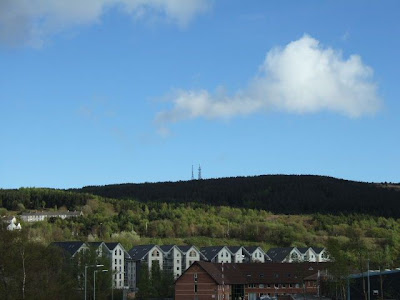
Pluck Pond is known as a refuge for some insectlife such as blue-tailed damselfly and the emperor dragonfly. As to its larger inhabitants the Council website for local anglers said of the Pluck Pond:
"extremely weedy... It's rarely fished but has some big bream, tench & eels for those looking to put some work in. Quite frankly no one knows what's in there!"
So whatever lurked in the pond would have something to eat.
It is also close to the new Liberty Stadium in Morfa and is on the fringe of the Enterprise Park and directly opposite the Morrison's superstore.
Google map of location:
Pluck Pond is known as a refuge for some insectlife such as blue-tailed damselfly and the emperor dragonfly. As to its larger inhabitants the Council website for local anglers said of the Pluck Pond:
"extremely weedy... It's rarely fished but has some big bream, tench & eels for those looking to put some work in. Quite frankly no one knows what's in there!"
So whatever lurked in the pond would have something to eat.
It is also close to the new Liberty Stadium in Morfa and is on the fringe of the Enterprise Park and directly opposite the Morrison's superstore.
Google map of location:
Subscribe to:
Posts (Atom)